

Insurance is one of those topics people usually avoid — right next to tax returns and gym memberships we promised to use in January.
But here’s the truth: insurance quietly protects your life, money, health, car, home, and sometimes your sanity.
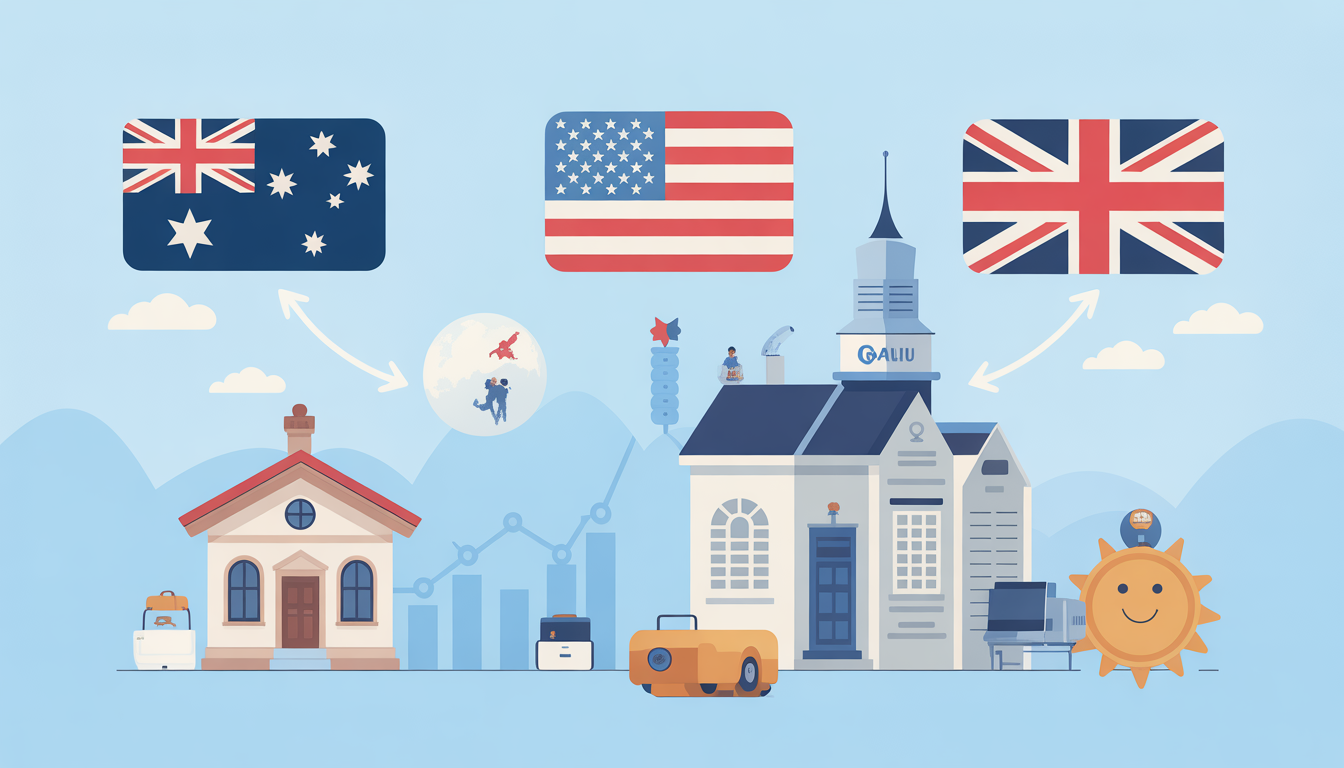
In 2026, insurance systems in Australia (AU), United States (USA), and United Kingdom (UK) look similar on the surface but work very differently underneath.
Some countries make insurance simple.
Others make it feel like solving a Rubik’s Cube while blindfolded.
This guide breaks everything down in simple language, with humor, real explanations, and practical comparisons so you finally understand:
✅ How insurance works in each country
✅ What you actually need
✅ Which system is cheaper or better
✅ What expats, investors, and travelers should know
Let’s begin.
What Is Insurance? (The Friendly Explanation)
Insurance is basically:
You pay a small amount now so a big problem later doesn’t destroy your wallet.
Think of insurance as a financial bodyguard.
You pay a premium, and if something goes wrong — accident, illness, fire, lawsuit — the insurer helps cover costs.
Without insurance, one bad day could become a financial horror movie.
The Basic Types of Insurance Worldwide
Across Australia, the USA, and the UK, the core categories are mostly the same:
| Insurance Type | What It Covers |
|---|---|
| Health Insurance | Medical care and hospital bills |
| Car Insurance | Accidents, damage, liability |
| Home Insurance | Property damage or theft |
| Life Insurance | Financial support after death |
| Travel Insurance | Emergencies abroad |
| Business Insurance | Company risks and lawsuits |
The difference isn’t what insurance exists — it’s how governments and private companies share responsibility.
Big Picture: Insurance Systems Compared
Before diving deep, here’s the 2026 snapshot.
| Feature | Australia | USA | UK |
|---|---|---|---|
| Healthcare Model | Public + Private Mix | Mostly Private | Public NHS |
| Insurance Complexity | Medium | Very High | Low–Medium |
| Out-of-Pocket Costs | Moderate | High | Low |
| Government Role | Strong | Limited | Very Strong |
| Private Insurance Use | Optional but common | Essential | Optional |
Now let’s unpack each country.
Insurance in Australia (2026 Guide)
Australia runs what many experts call a “hybrid insurance system.”
It combines government protection with private options — like ordering half healthy salad and half fries. Balance.
1. Health Insurance in Australia
Australia’s healthcare revolves around Medicare.
How Medicare Works
Medicare provides public healthcare funded by taxes.
Many services are free or subsidized, including:
- Public hospital treatment
- Doctor visits (partially covered)
- Emergency care
Australia’s legal and insurance framework evolved from English common law traditions and modern regulations like the Insurance Contracts Act designed to ensure fairness between insurers and policyholders.
Why Australians Still Buy Private Insurance
Even with Medicare, many Aussies buy private coverage because:
- Shorter waiting times
- Choice of doctor
- Private hospital rooms
- Dental and extras coverage
Fun reality:
Australians often buy insurance not because the system is bad — but because they don’t enjoy waiting months for knee surgery.
Pros of Australian Health Insurance
✅ Universal coverage
✅ Strong safety net
✅ Private upgrade options
Cons
❌ Out-of-pocket “gap fees”
❌ Private insurance premiums rising
2. Car Insurance in Australia
Australia requires Compulsory Third Party (CTP) insurance.
This covers injury to other people — not your car.
Additional optional policies include:
- Third-party property
- Fire & theft
- Comprehensive insurance
Typical comprehensive premiums range roughly from AUD $1,300–$2,000 depending on driver and location.
Yes, city drivers usually pay more.
Apparently traffic jams increase both stress and insurance prices.
3. Home Insurance in Australia
Common protections include:
- Natural disasters
- Theft
- Fire damage
Important note: Australia’s exposure to floods and bushfires means insurers carefully price risk.
Translation: living near beautiful beaches may also mean higher premiums.
4. Life Insurance in Australia
Often provided through:
- Superannuation funds (retirement accounts)
- Private insurers
Many Australians already have basic life insurance without realizing it.
Surprise! You were insured all along.
Insurance in the United States (2026 Guide)
Welcome to the world’s most complicated insurance market.
In the USA, insurance is less a system and more… an ecosystem.
1. Health Insurance in the USA
Unlike Australia or the UK, the US has no universal healthcare system.
Coverage depends on:
- Employer insurance
- Private marketplace plans
- Government programs (Medicare, Medicaid)
Healthcare access heavily depends on insurance status, with coverage tied to employment or eligibility programs rather than universal access.
Key Insurance Terms Americans Know Too Well
- Premium — monthly payment
- Deductible — amount you pay first
- Copay — visit fee
- Network — doctors you’re allowed to see
Americans sometimes need a dictionary just to visit a doctor.
Why US Insurance Is Expensive
Reasons include:
- High medical costs
- Administrative complexity
- Private hospital pricing
- Legal liability risks
Average health spending per person is far higher than in universal systems.
Pros of US Health Insurance
✅ Fast access to specialists
✅ Advanced medical technology
✅ Wide choice of providers
Cons
❌ Expensive premiums
❌ Complex paperwork
❌ Risk without coverage
2. Car Insurance in the USA
Car insurance is mandatory in nearly all states.
Coverage types:
- Liability
- Collision
- Comprehensive
- Personal injury protection
Average costs vary widely because each state sets its own rules — meaning California drivers and rural Texas drivers live in completely different insurance universes.
3. Home Insurance in the USA
US homeowners insurance often includes:
- Property damage
- Liability protection
- Natural disaster coverage
However, floods and earthquakes often require separate policies.
Yes, insurance companies love add-ons.
4. Life Insurance in the USA
Extremely popular due to:
- High healthcare costs
- Mortgage debt
- College tuition concerns
Common types:
- Term life
- Whole life
- Universal life
Americans often treat life insurance as long-term financial planning rather than simple protection.
Insurance in the United Kingdom (2026 Guide)
The UK system feels refreshingly simple compared to the USA.
Why?
Because of the National Health Service (NHS).
1. Health Insurance in the UK
The NHS provides healthcare funded mainly through taxation.
Most residents receive treatment without direct bills after appointments or hospital visits.
You go to the hospital… and don’t get a shocking invoice afterward.
Many visitors consider this magical.
Do Brits Buy Private Insurance?
Yes — but only around a small minority do.
Reasons include:
- Faster specialist access
- Private hospital comfort
- Avoiding waiting lists
Pros of UK Healthcare Insurance
✅ Universal access
✅ Very low personal costs
✅ Simple system
Cons
❌ Waiting times for non-urgent care
❌ Limited provider choice
2. Car Insurance in the UK
UK drivers must carry at least third-party liability insurance.
Average premiums tend to be lower than US levels but depend heavily on age and city driving risk.
Young UK drivers quickly learn two facts:
- Insurance is expensive.
- So is owning a fast car before age 25.
3. Home Insurance in the UK
Policies usually split into:
- Buildings insurance
- Contents insurance
Mortgage lenders normally require buildings coverage.
4. Life Insurance in the UK
Common among:
- Homeowners
- Families with mortgages
- Long-term financial planners
Often bundled with income protection insurance.
Healthcare Insurance Comparison (AU vs USA vs UK)
Here’s the clearest way to understand the difference.
| Feature | Australia | USA | UK |
|---|---|---|---|
| Universal Coverage | Yes | No | Yes |
| Private Insurance Need | Optional | Essential | Optional |
| Average Complexity | Medium | Very High | Low |
| Out-of-Pocket Costs | Moderate | High | Low |
| Waiting Times | Medium | Short | Longer |
Simple summary:
- UK: Government-first system
- Australia: Balanced mix
- USA: Market-driven model
Cost of Insurance Across Countries
Approximate 2026 comparison:
| Insurance Type | Australia | USA | UK |
|---|---|---|---|
| Health Insurance | Moderate | High | Low |
| Car Insurance | Medium | High | Medium |
| Home Insurance | Medium | Medium | Medium |
| Life Insurance | Moderate | Moderate | Moderate |
Healthcare structure is the biggest cost driver.
When medical bills are high, insurance premiums follow.
Regulation and Consumer Protection
Australia
- Strong consumer protections
- Federal and state oversight
- Fair contract regulation laws
USA
- State-based regulation
- Highly competitive insurers
- Complex legal framework
UK
- Strong national regulation
- Consumer-focused policies
- Simpler complaint systems
How Culture Shapes Insurance
Insurance isn’t just economics — it’s cultural.
Australia
People expect government support but enjoy private upgrades.
USA
Insurance equals financial independence.
UK
Healthcare seen as a public right.
Which Country Has the Best Insurance System?
There is no universal winner.
It depends on priorities.
| If You Want… | Best Country |
|---|---|
| Lowest healthcare cost | UK |
| Fast specialist access | USA |
| Balanced system | Australia |
| Simplicity | UK |
| Choice and flexibility | USA |
Insurance Tips for Expats and Travelers (2026)
If moving between these countries:
Moving to Australia
- Register for Medicare quickly
- Compare private extras plans
Moving to the USA
- Secure employer health insurance immediately
- Never remain uninsured
Moving to the UK
- Register with a GP for NHS access
- Consider private cover for speed
Common Insurance Mistakes People Make
Let’s save you from classic errors:
- Buying cheapest policy only
- Ignoring exclusions
- Underinsuring property
- Skipping travel insurance
- Not reviewing policies yearly
Insurance is boring… until you need it.
Then it becomes extremely exciting.
Future Insurance Trends for 2026–2030
The industry is changing fast.
Major Trends
✅ AI risk pricing
✅ Digital claims processing
✅ Climate risk insurance
✅ Telehealth coverage
✅ Usage-based car insurance
Insurance companies now use data more than detectives in crime movies.
Final Thoughts: Which System Wins in 2026?
Here’s the honest conclusion:
- The UK offers simplicity and universal protection.
- Australia provides balance and flexibility.
- The USA delivers speed and innovation — but at a higher cost.
The best insurance system isn’t about perfection.



Leave a Reply